





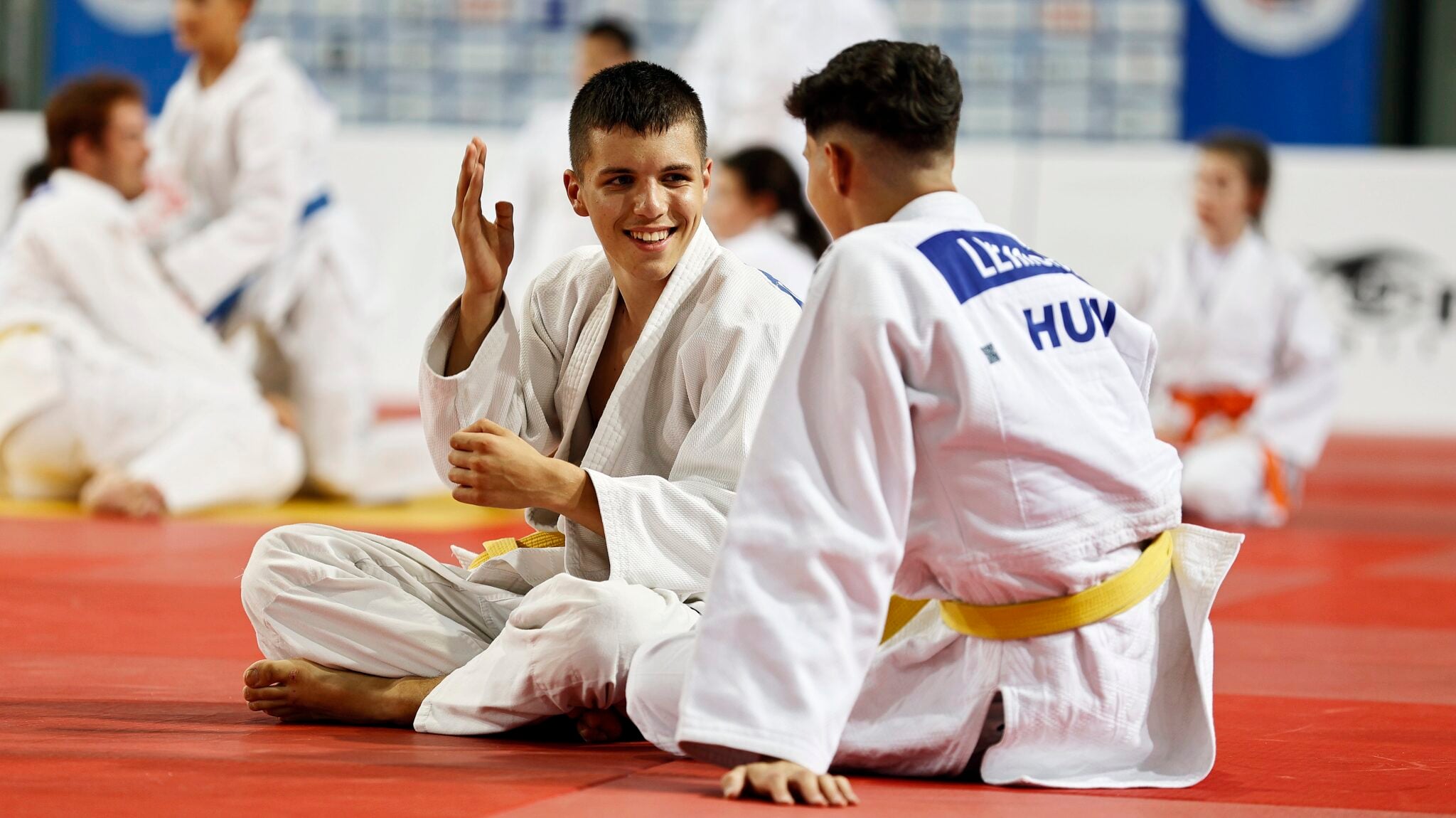
The sports hall is all squeak and murmur: soft tatami underfoot, the rustle of white gi, a referee’s palm cutting the air. On the tatami, a tall young man with a shy smile bows, steps forward, and takes his grip. This is Bence. He attends the adapted judo events with his club-mates, his coach, everyone calls her “Aunty Margó”, and his parents, who have learnt that sometimes the bravest thing you can do for your child is to open the door and let him walk through it.

“We didn’t make a drama of it,” Bence’s dad tells, watching his son shadow through the first exchange. “If he squealed on the playground and people stared, we kept going because if you stay home to avoid discomfort, the world just gets smaller.”
Early Signs, Early Action
Bence is his parents’ first child. The concerns began around his second birthday. He would been born with childhood epilepsy, so they were already monitoring him closely. His mum, Kata, is a special needs educator; in nursery she saw the signs: the distant focus, the way he walked a little differently, a reluctance to follow rules, the repetitive delight of spinning wheels. “We would say something and it wouldn’t land,” she remembers. “Nothing extreme, but enough to make us move and alert.”
Back then, this was 2018, autism awareness in their town felt thin. Locally, the answer was “delayed speech, nothing more.” They went to Budapest, to the Vadaskert clinic, privately. Observation followed. No hospital stay. A diagnosis at four. Relief, because a name is a map, and a map lets you mark a route.
Nursery proved kind, no exclusion, no whispers. By primary school, the city of Baja had launched an autism unit, and Bence slotted in. “He adapts well,” his dad says. “That helps, and we didn’t hide.” They kept testing the edges: the park, the shop, birthday parties; not because it was easy, often it wasn’t, but because shrinking the world would only make the walls higher later on.
They also started therapy early, even before the paper diagnosis. Movement therapy. Skills work. “It mattered,” Kata says simply. “Those sessions meant we weren’t starting from zero at four.”
The Hardest Bit: Wanting In
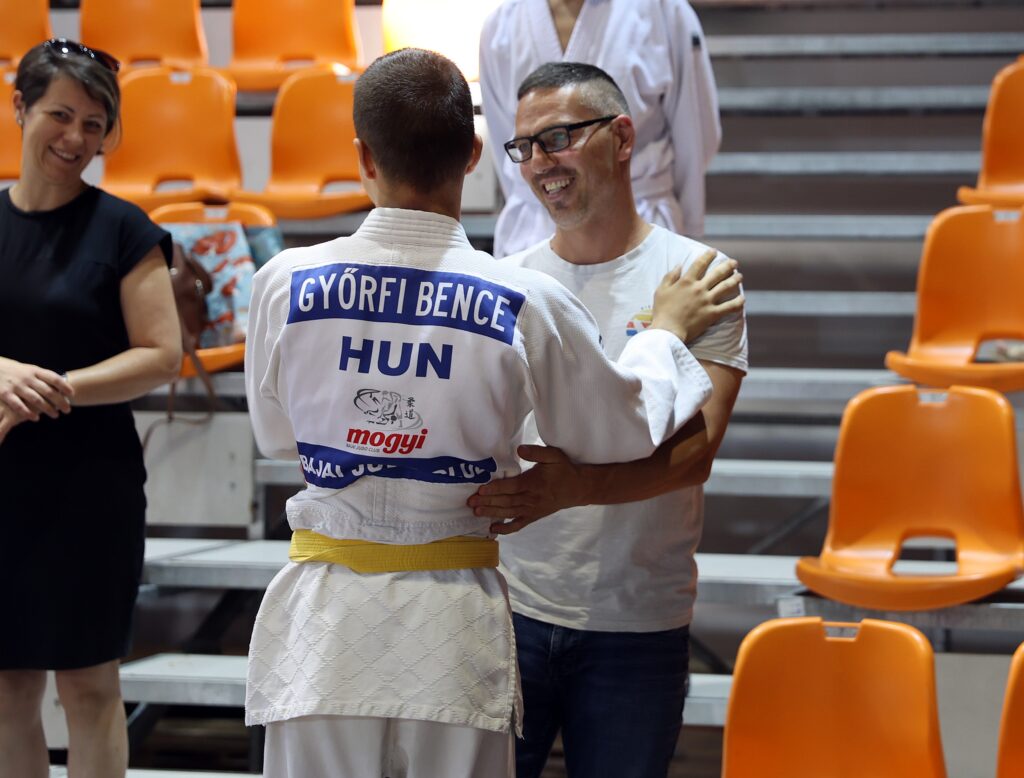
The rougher waters came in adolescence. Not meltdowns or crises, more the ache of almost-belonging. “He is close to average in some ways,” Kata explains, “and the average life draws him in, friends, fun, love, but it doesn’t always reach back. He thinks people are laughing with him, not at him. He doesn’t always read those edges.”
How much of that is autism and how much is the teenage storm? Who can separate the strands? They don’t try. What they do is let him move. He cycles to school alone, meets friends when he can, goes to the gym, wanders into town. “We can either let him go and accept the risk, or lock him in his room and breed anxiety.” – says the dad. He doesn’t take any medication for anxiety, we would rather keep opening the world. Judo helps with that.”
Finding Judo, and a Coach Who “Gets It”…
At school they noticed he loved to run. Athletics was floated but the practicalities of a group not built for neurodiversity made it hard. Then came judo: the Mogyi Bajai Judo Club said yes, even though Bence was their first special needs athlete.
It was not easy. “Years,” his dad says. “With dips.” The biggest hinge wasn’t strength or technique, Bence is coordinated, learns shapes quickly, but something more elusive: the fight. “He would look to the coach, ‘Am I doing it right, Margó?’, but he didn’t yet have that switch, that ‘I want to win’ grit.”
Aunty Margó, the kind of coach you hope your child finds, became the difference. “Without someone who treats it as a calling,” his dad says, “no amount of natural movement helps. This takes patience.” They also worried at first about the contact. Would a gentle boy struggle with a sport that asks you to throw and pin? “But judo teaches you to separate ‘harm’ from ‘technique’,” Kata says. “He got that.”
Competitions were the next debate. The stress was real, white-knuckle, stomach-knot real. Dad wanted to stop. “Life was already stressful enough.” They talked. They stayed. “We decided some stress is good stress,” he says. “It’s part of sport. Part of life.”
Today, Bence is six years into judo. The switch still flickers, he isn’t the ‘tear-them-to-bits type’, but the arc tilts towards steadier ground. He bows; he tries; he keeps coming back.
Ask him why he loves it and he answers with a grin: “Because it feels good. I belong there. New friends. Team-mates. And… nice girls.” He laughs. The bow is the same, whether you are chasing a medal or chasing belonging.
What Judo Gave and What it Saved
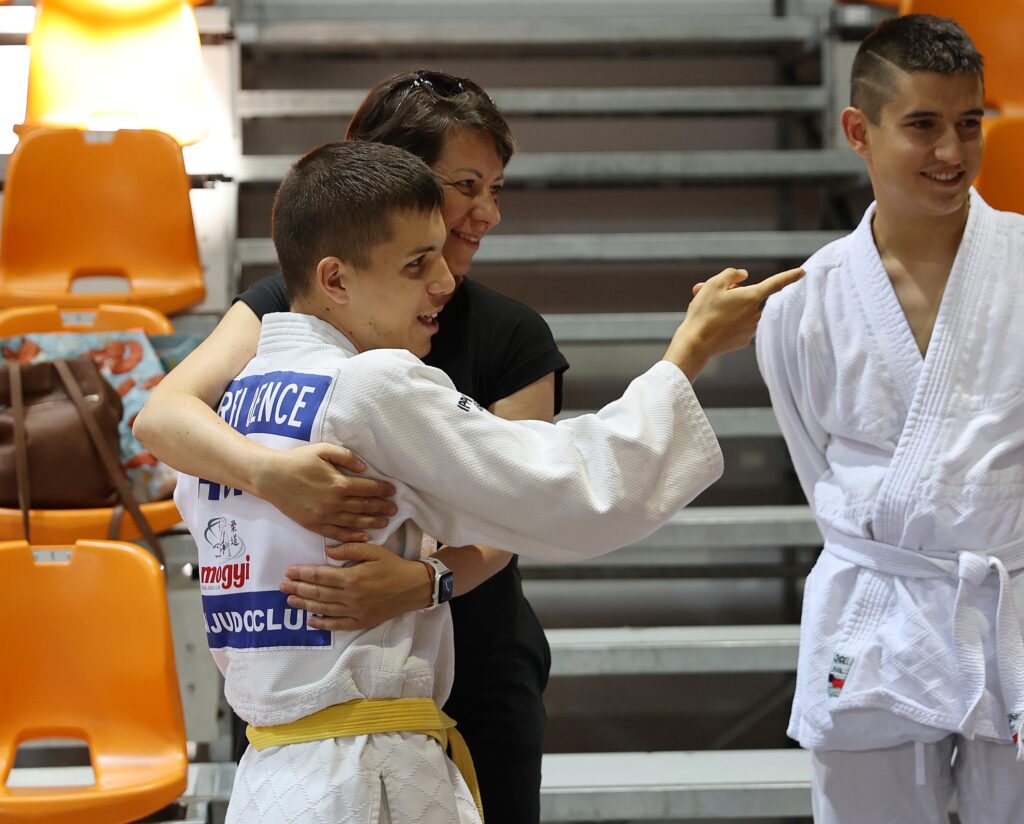
“Resilience” Kata says, staying power. Then a place to be, a reason to go. The dojo becomes the room where your name is said when you arrive, where people notice if you miss a week, where older teens stop in the street to fist-bump you instead of drifting past. “You can’t buy that for your child,” his dad says. “We can teach, love, be endlessly patient but we can’t replicate a community.”
He is blunt about the alternative. Without judo, without that weekly rhythm of effort and release, they believe Bence would be a young adult carrying far more anxiety. “Autism isn’t curable,” Kata says, “but if anything heals, it’s belonging. Regular sport, safe structure, the sense of a team, call it therapy if you like. It’s made the difference.”
For the parents, it’s a kind of breathing space. Not escape; reassurance. “We still worry about the future, every parent does,” his dad admits. “The big fear is obvious: what happens when we are gone? But I can tell you this, Bence’s autism isn’t a tragedy. We are lucky. Not everyone gets this version. He could easily have landed where integration was impossible.” He has seen that, too, at adapted events where the needs are greater, the supports thinner. Which is why he believes more people should witness these tournaments. “If you are unhappy, come watch,” he says. “Then go home and put your life in order.”
Brother, Ballast, Normal Chaos
There’s a younger brother, Barna, arrived after long, late-night talks about whether to try again. They are glad they did. “Honestly?” Dad smiles. “Sometimes the ‘average’ child is harder to raise than the autistic one.” The boys get on. Acceptance takes practise, even inside a family. They keep teaching it.
The Philosophy of the Harder Road
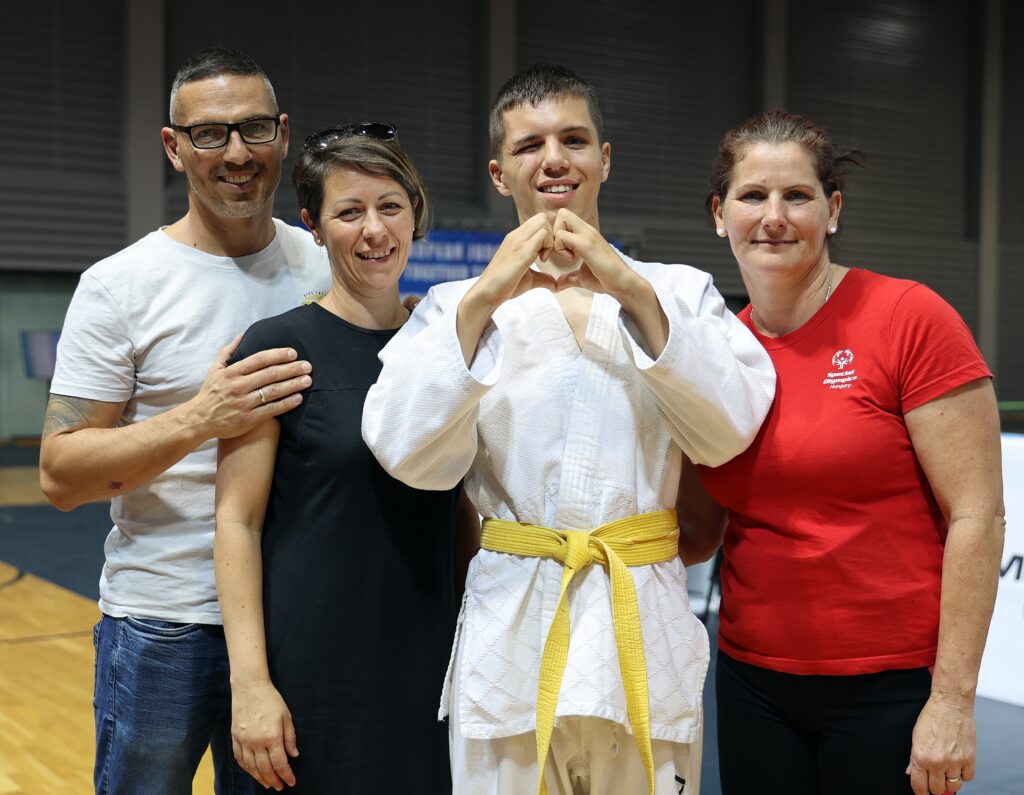
If you ask for advice, the parents don’t reach for tidy slogans. They reach for action. “Choose the harder road,” Dad says. “Go to the playground. Go to the supermarket. Don’t build the walls of that ‘closed world’ higher by staying inside. We believe Bence is the way he is with people because we kept opening doors. Experience became confidence.”
Meanwhile, behind those doors, you hope to find a coach like Aunty Margó. She once worked in a special school. Something caught in her and never let go. “I decided that is my path,” she tells. “I studied special pedagogy and dedicated my life, school and dojo, to this work.” You can see it in the way she meets each athlete where they are, in the firm, warm voice that makes the mat feel like solid ground.
Finally, Bence was asked one last question. Why here? Why this?
“Because I meant to be here,” he says.
Perhaps that’s the point. Judo didn’t change who Bence is. It gave him somewhere to be who he is, fully, repeatedly, with people who see him and for his parents, that is everything: a world a little wider, a future a little clearer and a boy who keeps turning up.
Author: Szandra Szogedi