





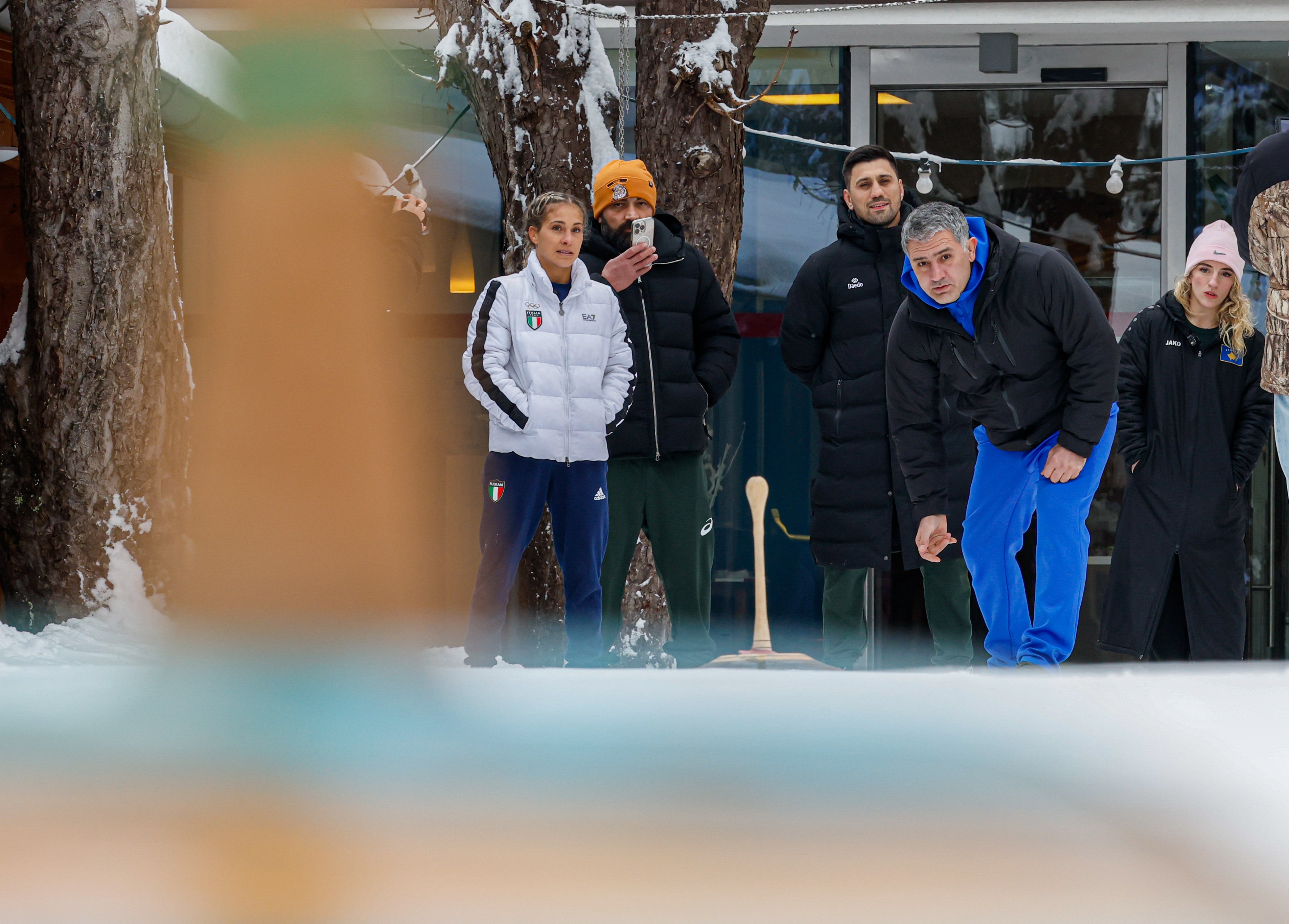
At the Mittersill Olympic Training Camp 2026, Olympic medallists and World champions swapped tatami for ice as they celebrated the approaching Winter Olympic Games and discovered that sliding ice stocks requires a very different kind of balance.

The mountains surrounding Mittersill have witnessed countless judo training sessions over the years, sweat, sacrifice and the relentless pursuit of perfection. However, on this particular afternoon, the soundtrack was different. Instead of the familiar thud of bodies hitting the tatami, there was laughter, competitive banter and the distinctive clack of ice stocks sliding across frozen surfaces.
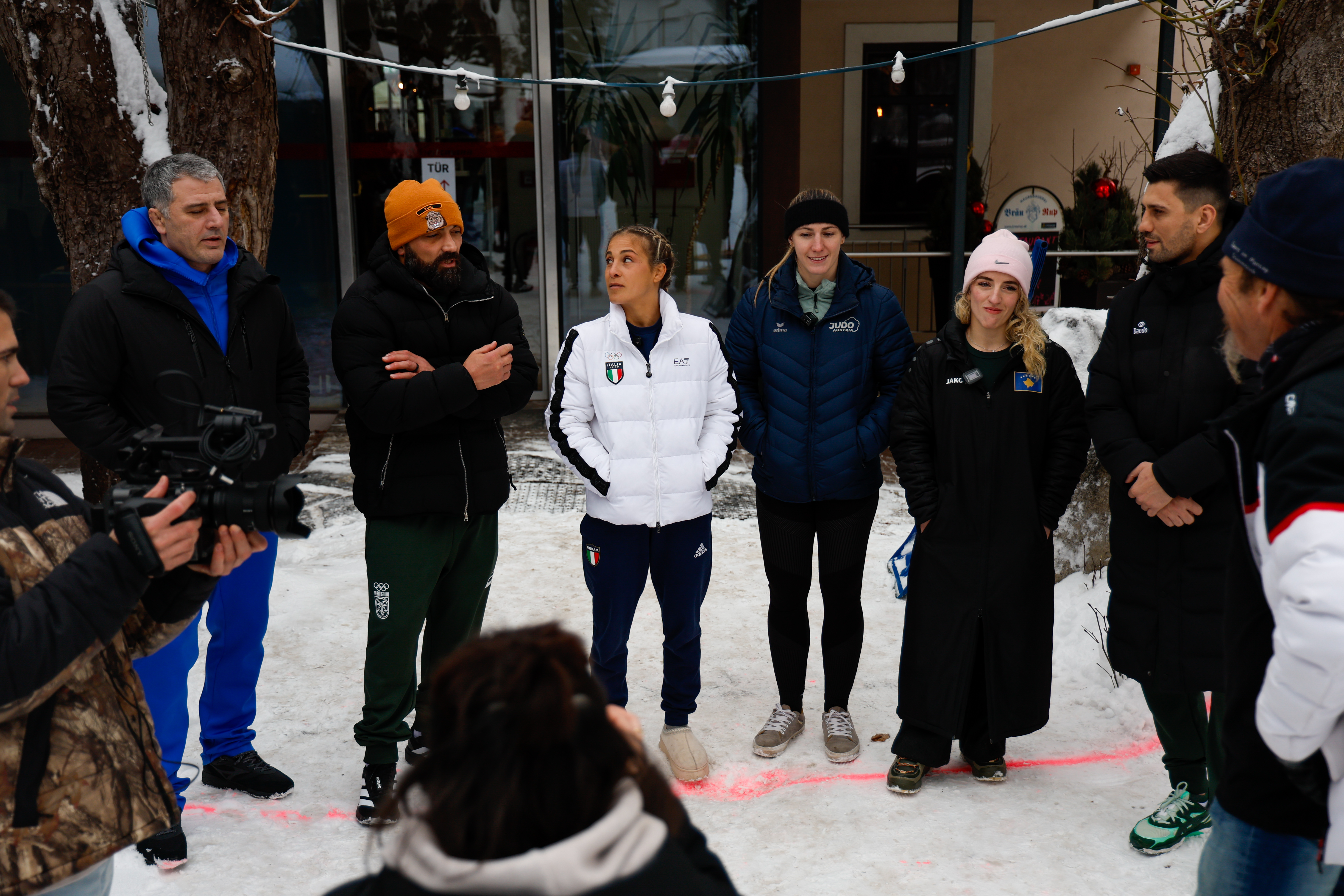
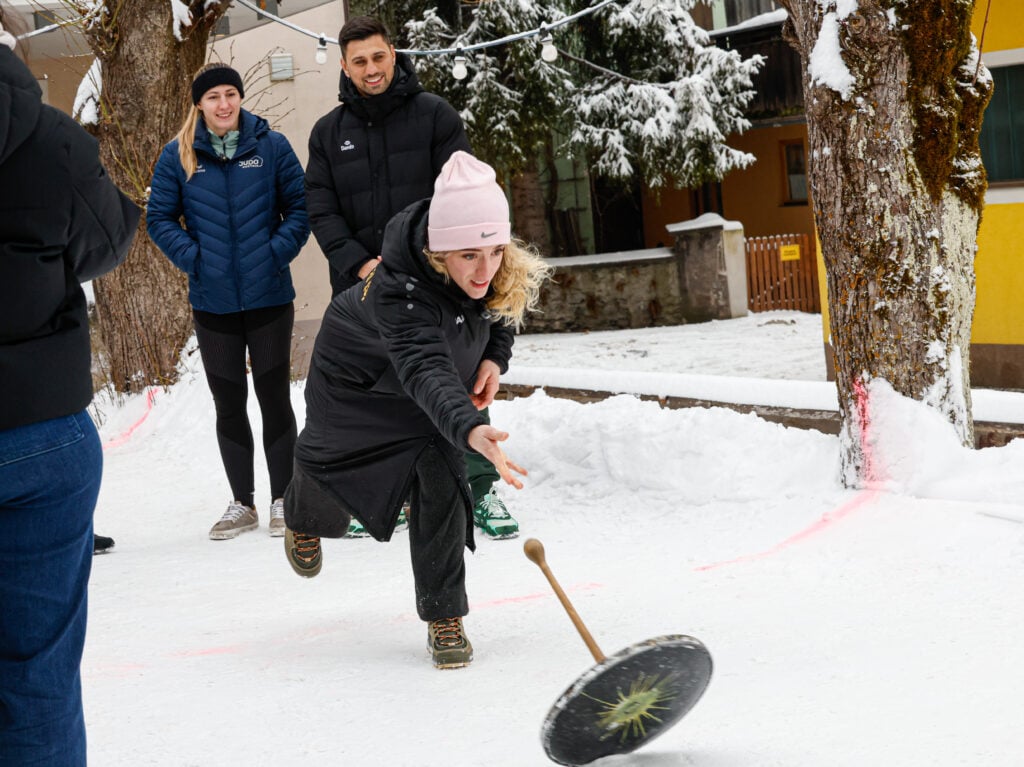
Six judoka, collectively holding countless Olympic, world and European medals, decided to embrace the approaching 2026 Milano Cortina Winter Olympics in the most hands-on way possible…, by trying their hand (and balance) at Eisstock, the traditional Bavarian ice stock sport.
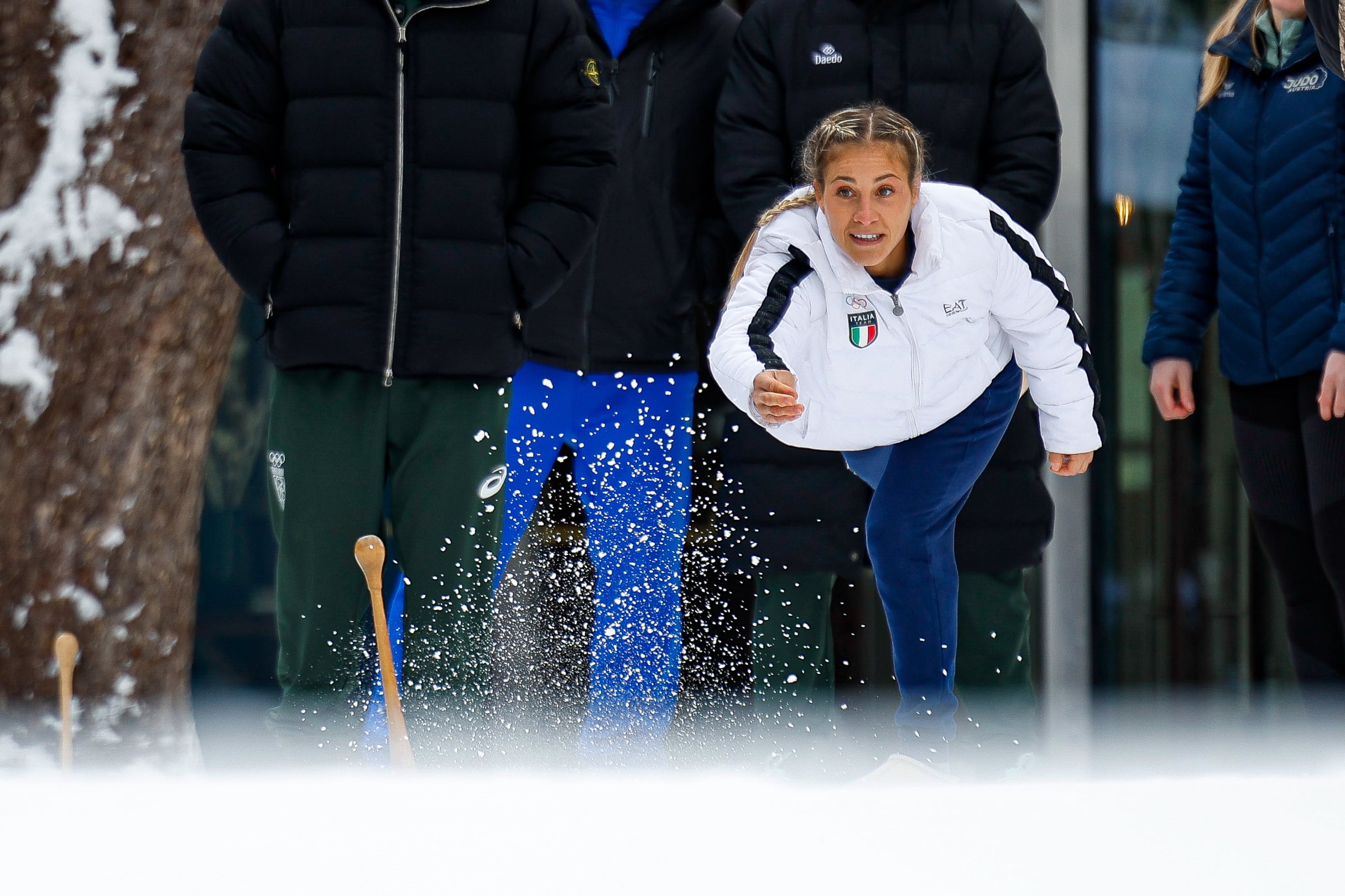
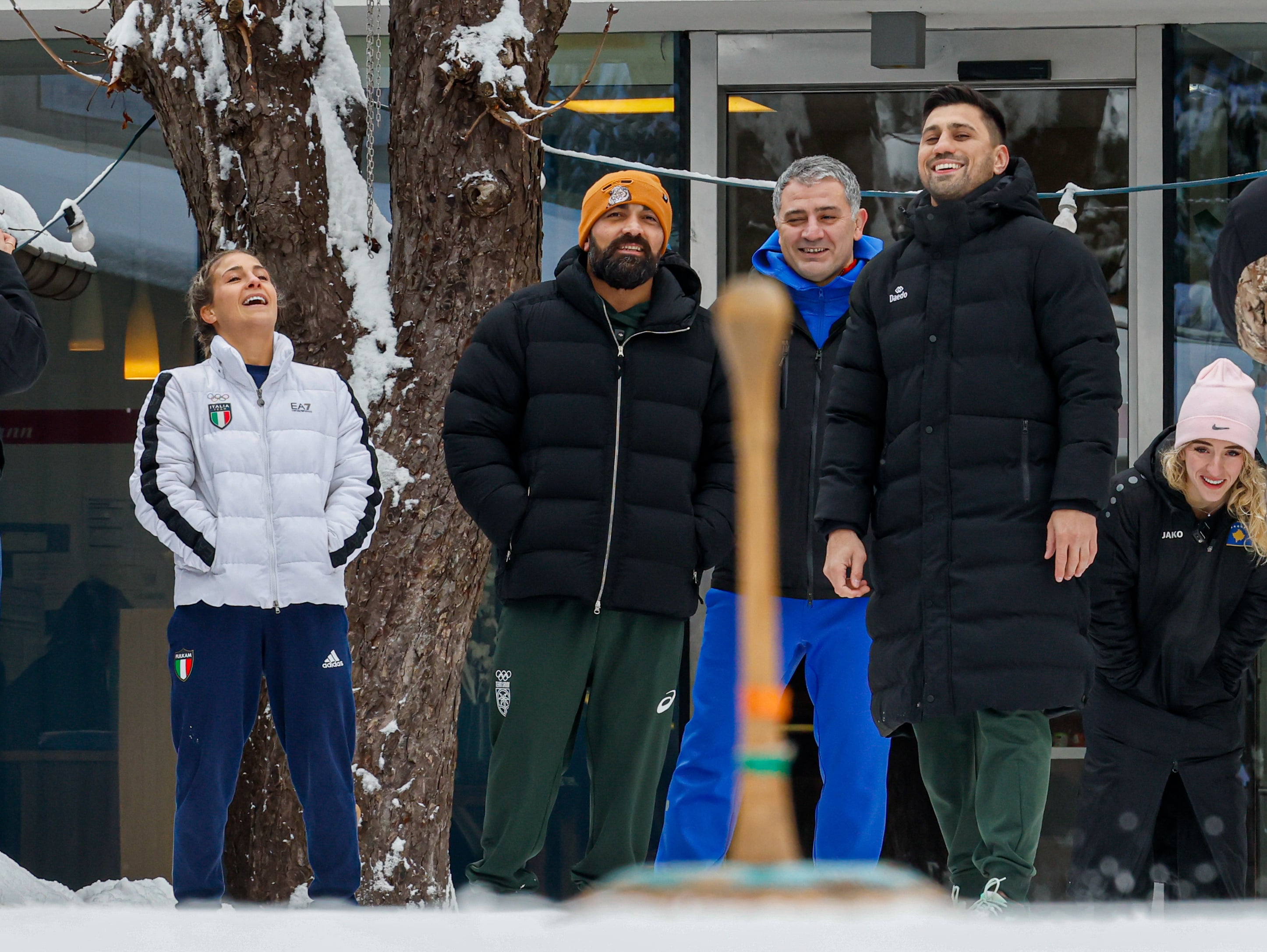
Eisstock, for the uninitiated, involves sliding weighted ice stocks across an ice surface, aiming for a target or covering the longest distance. It is deceptively simple in concept, fiendishly difficult in execution, much like judo, really. The sport enjoyed enough popularity in Bavaria and Austria by the late 19th century to be featured in the Winter Olympic demonstration programmes in 1936 and 1964, showcasing the skill required to compete at the highest level.
On this snowy afternoon in Mittersill, it would showcase something else entirely, that Olympic and World champions from summer sports are perfectly capable of falling over on ice whilst having the time of their lives. Two teams formed, each captained by an Olympic gold medallist with very different leadership styles.
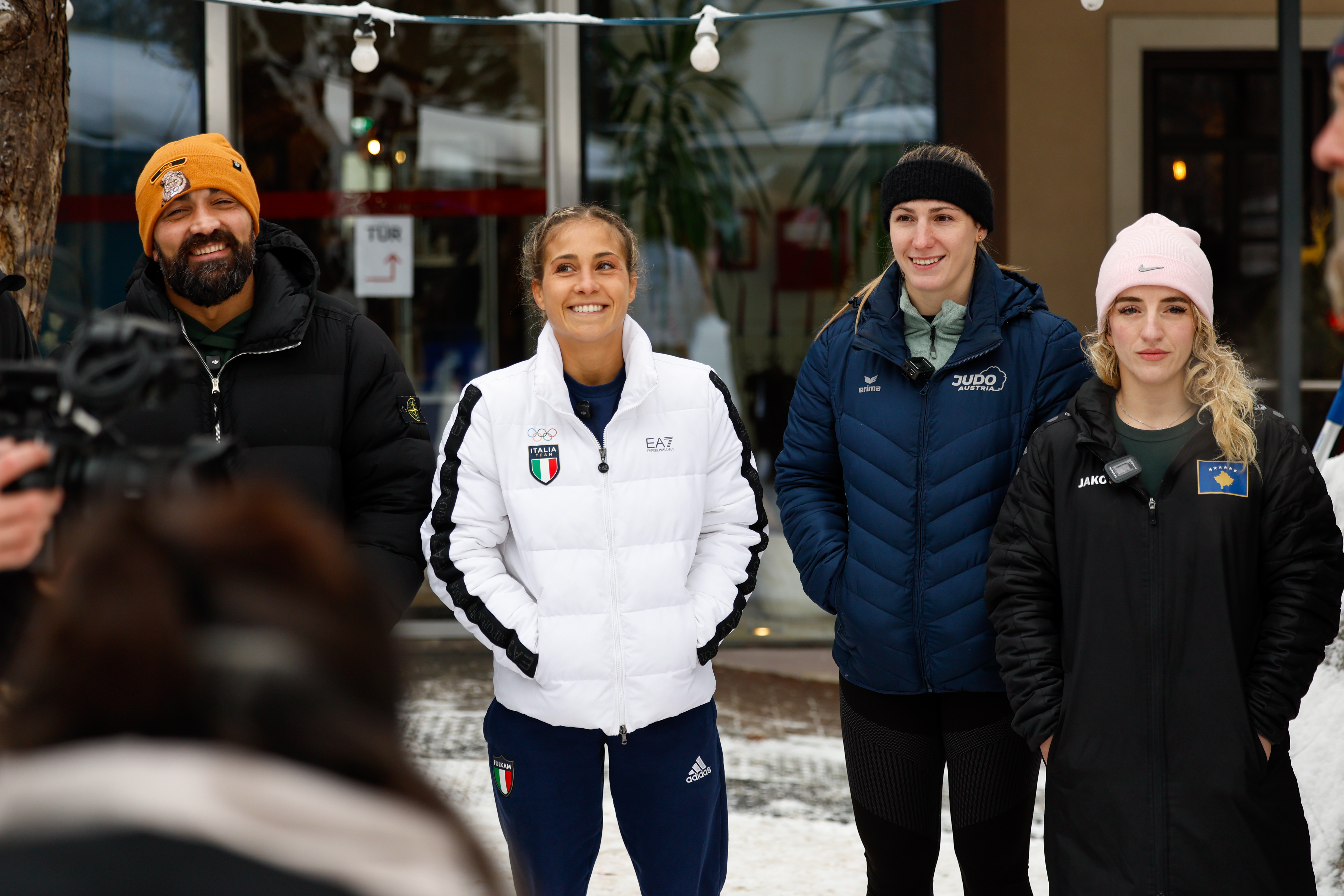
Team Warriors, led by Athens 2004 Olympic champion Ilias Iliadis (Greece), assembled a formidable lineup with double Olympic medallist Odette Giuffrida (Italy, Rio 2016 silver, Tokyo 2020 bronze) and 2013 World Champion Elkhan Mammadov (Azerbaijan).
Team Champions, captained by Tokyo 2020 Olympic champion Distria Krasniqi (Kosovo), countered with double Olympic medallist Michaela Polleres (Austria, Tokyo 2020 silver, Paris 2024 bronze) and Olympic silver medallist Rustam Orujov (Azerbaijan, Rio 2016).
The format? Best of three attempts. The stakes? Bragging rights and perhaps more importantly, a moment to celebrate the Olympic spirit, regardless of season.


For Giuffrida, the connection between summer and winter Olympians runs deeper than the calendar suggests. “I have a lot of friends competing in winter sports. I have already spoken with them and whether it is winter or summer sport, we are all one team,” she explained, her enthusiasm unmistakable. “What I wish them and what I told them, is to give everything, to have fun, to do it for themselves and their own motivation and to just enjoy everything, every single second of this amazing time that is coming.”
This will be Odette’s first time experiencing the Winter Olympics as a spectator and she is genuinely excited. “I am really, really happy. I never experienced something like this, so I can’t wait to go and watch the Olympics at home.”
Asked about her favourite winter sport, she didn’t hesitate. “Snowboarding, I will definitely watch snowboarding and alpine skiing but honestly, I like to watch everything.” Then came the harder question. Which winter sport looks most difficult?
“For me, all these winter Olympic sports look difficult because, unfortunately, I never practised any of them. Everything looks hard but if I have to pick one that seems the hardest, I would say maybe ski jumping.” Fair assessment from someone who throws people for a living.
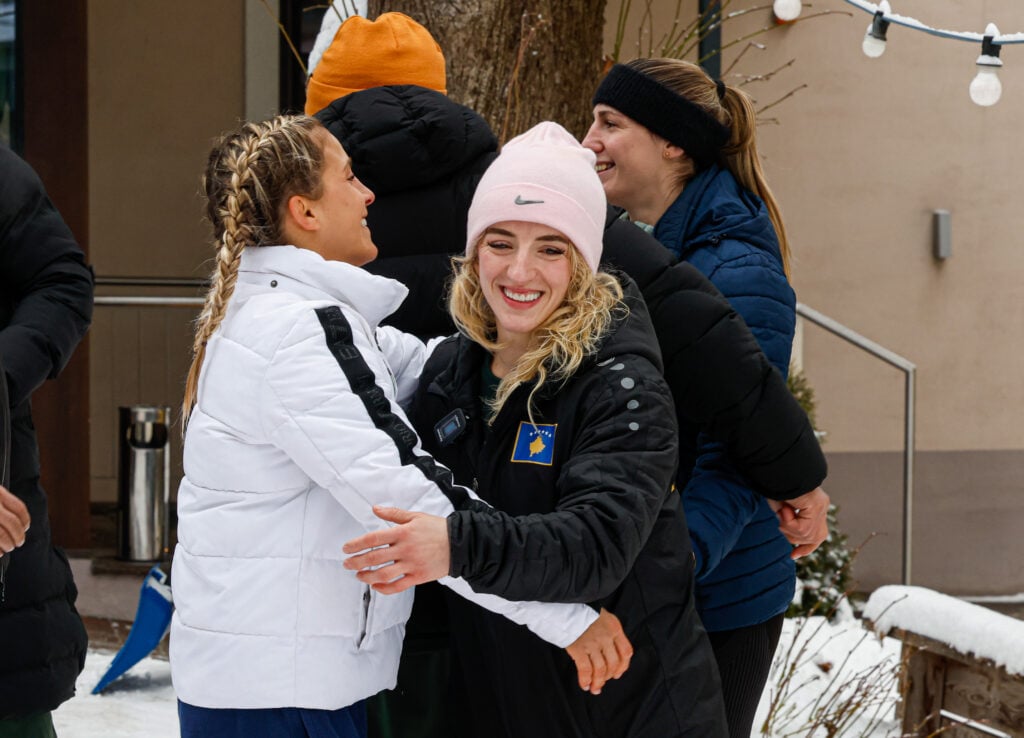
Distria Krasniqi, now a two-time Olympic medallist (Tokyo 2020 gold, Paris 2024 silver), reflected on what it means to reach the pinnacle of sport and what message she would send to athletes heading to Milano Cortina.
“I think becoming an Olympic champion is every athlete’s dream and it requires really hard work, discipline and everything. You must sacrifice a lot from the normal life that normal people live,” she said thoughtfully. “For me, it was a dream since I was a child and I made it through. Now, I have two Olympic medals and I am very proud of myself. I hope I will take the third one, I am working on it.”
Her advice to aspiring Olympians is straightforward: “I think everyone can do it if they work hard, chase their dreams and really want it. You must work very hard to achieve it.”
As for the Eisstock experience? “It was very nice. It was my first time trying this game. It was a nice experience and every time we are together with judo people from different countries, playing games and doing stuff, it is always fun.” Distria’s favourite winter sport to watch? “Ski jumping. I think it is very fun to watch and it is exciting.”
As someone who knows intimately what standing on an Olympic podium feels like, Distria had a message for the athletes heading to Italy. “I want to wish all Olympians heading to Italy the best of luck, especially the Olympians from Kosovo. My message is to enjoy these Olympic Games because they will end fast and the memories will last forever. It is important to have a good performance, of course, to take a medal but it is also important to enjoy. So my message is, enjoy these Olympics.”
It is advice born from experience, delivered with the wisdom of someone who understands that Olympic moments, whether victorious or not, become the stories you tell for the rest of your life.
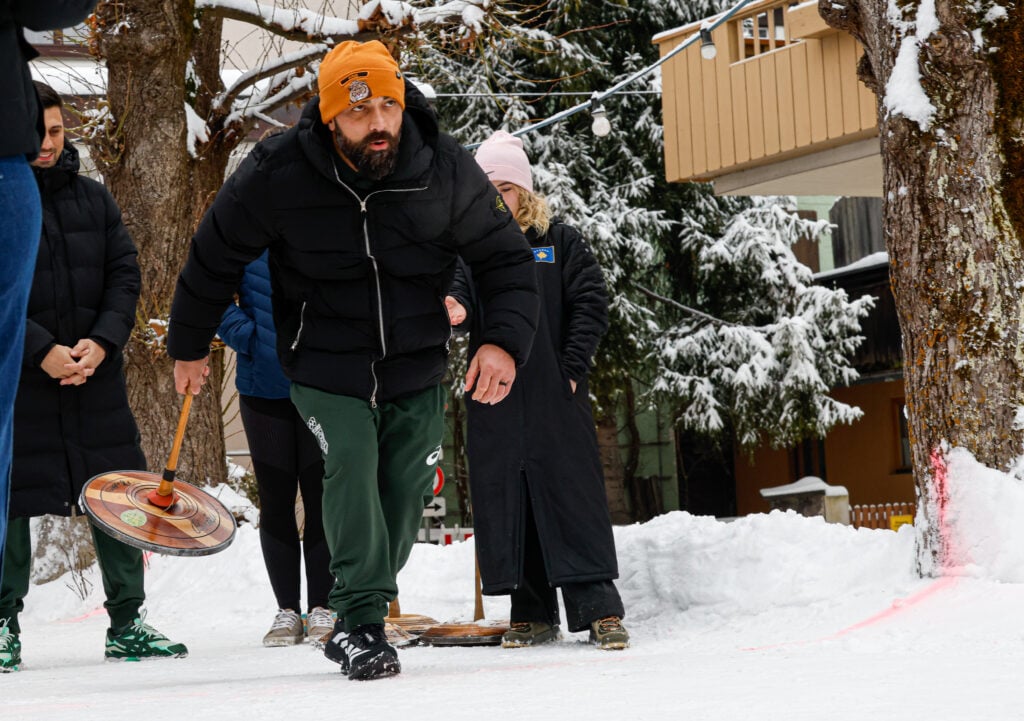
The beauty of this afternoon in Mittersill wasn’t really about who won the Eisstock competition, though competitive athletes being competitive athletes, you can be certain they cared in the moment. It was about judo champions from different nations, different weight categories, different generations, united by respect for the Olympic ideal, summer or winter.
These are athletes who have felt the weight of national expectation, who have trained through injuries and setbacks, who have stood on podiums whilst their anthems played. They understand what the winter Olympians heading to Milano Cortina are experiencing the nerves, the preparation, the dreams riding on a few crucial moments.
With that, on a snowy afternoon in the Austrian Alps, they celebrated those athletes in the best way they knew how, by trying something completely outside their comfort zone, falling over a bit, laughing a lot and creating memories that will last long after the ice melts.
Watch the full video to see which team emerged victorious and to witness Olympic and World Champions discovering that balance on ice is an entirely different challenge to balance on the mat.

Author: Szandra Szogedi