





Today, across Europe, more than two dozen countries offer judo sessions for individuals with various disabilities or medical conditions, either through dedicated programmes or within mainstream settings. Among them are Azerbaijan, France, Hungary, Croatia, Portugal, Poland, Lithuania, Serbia, Türkiye, Finland, Germany, Georgia, the Netherlands, Slovenia, Sweden, Switzerland, Romania, Ukraine, Norway, Kosovo, Austria, Spain, Italy, Great Britain and more. The inclusive community continues to grow day by day, and the saying ‘judo for all’ is becoming more deeply ingrained with every passing moment.

Now, when you live in the Faroe Islands, a small archipelago in the North Atlantic, home to just 55,000 people, resources for sport are always limited. Yet in the quiet dojos scattered across the islands, something powerful has been growing: a commitment to making judo accessible to everyone. This weekend, that commitment takes a historic step as the Faroe Islands Judo Federation brings its first ever adapted judoka to compete at the EJU Get Together Tournament in Poland.
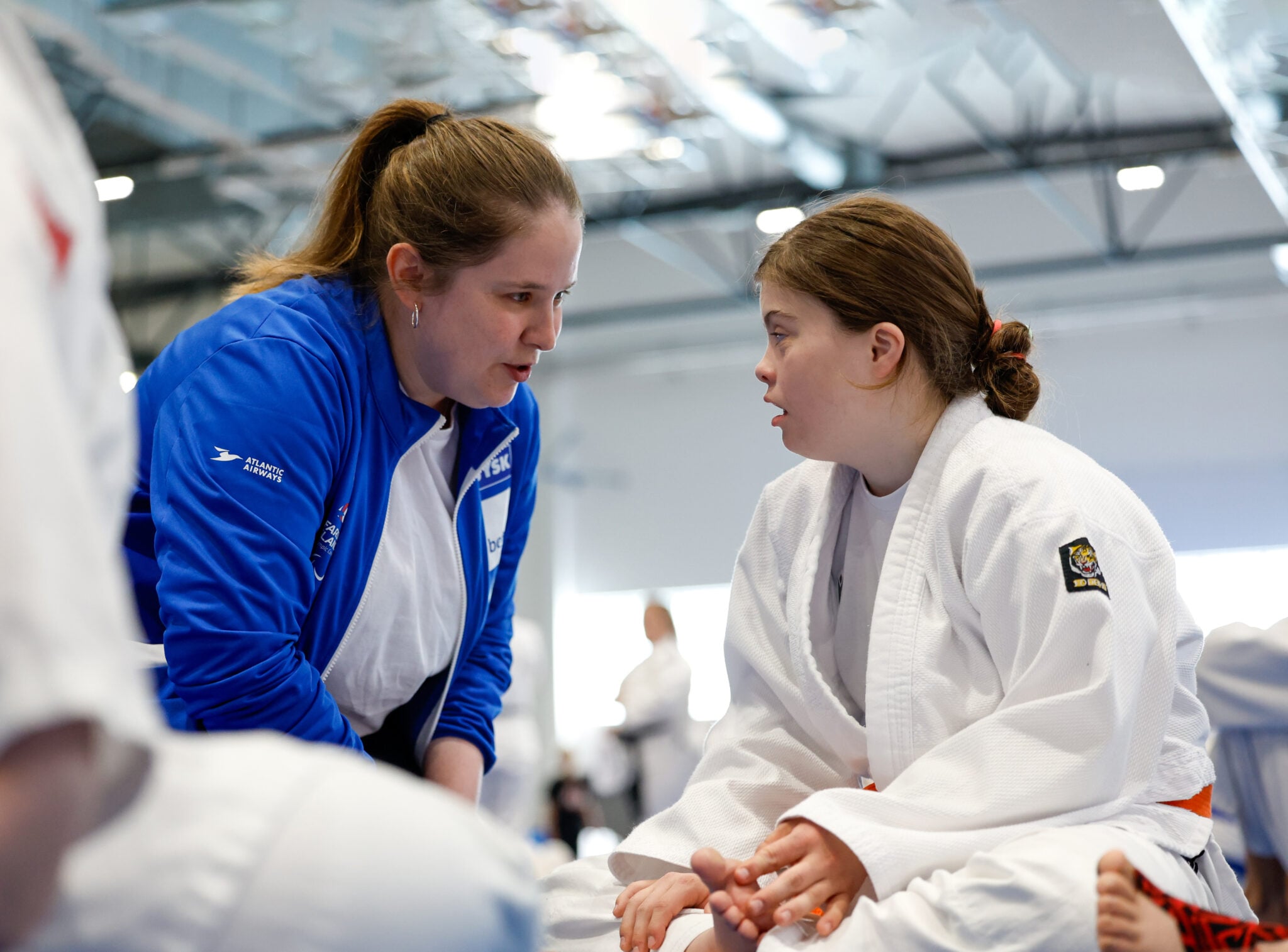
At the heart of this story are many individuals but among them is Sanna Nolsoe Djurhuus, coach and General Secretary of the Faroe Islands Judo Federation, who believes that true inclusion requires action.
“If you want to create an inclusive community, you should always look and ask: ‘who is not here’,” she says. “So take a look around your dojo. Who is missing? I can assure you they want to be there but how are you actively inviting them to come? Inclusion is an effort, but it’s our responsibility to put in that effort. This is not only applies for disability but for example for women in judo too.”
The milestone in Poland is not the result of a sudden project or external campaign. Instead, it is the natural continuation of something that has always been part of judo in the Faroe Islands.
“We don’t have a separate adapted judo club or a special session,” Djurhuus explains. “We have always had athletes with additional needs, integrated into the mainstream training. Some have intellectual impairments, some limb deficiencies, but everyone trains together. We adapt ourselves so they can be part of our clubs.”
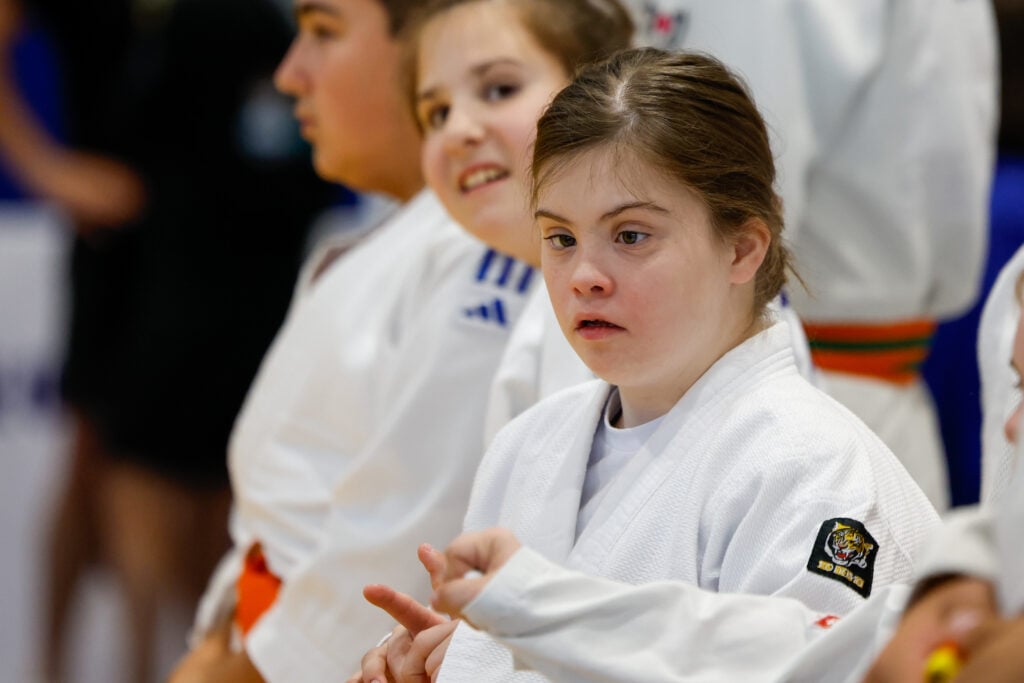
The athlete leading this breakthrough is a young woman with Trisomy 21 Down Syndrome, Jórun Mai Smith, who first stepped onto the tatami at age ten, introduced by her father, himself once a judoka. What started as family tradition quickly revealed itself as talent.
“Soon everyone realised she was really good,” Djurhuus recalls. “She has been training with the mainstream team ever since. The main commitment really comes from her, and from her parents, who have been there every step of the way.”
Until recently, adapted judoka in the Faroe Islands had little choice but to compete in mainstream competitions, often against opponents without comparable challenges. That reality limited not only fairness but also visibility. The emergence of tournaments like the EJU Get Together has changed that.
“Now they have an opportunity to come to a competition where they meet equal fights,” Djurhuus says. “They can show their talent on their own level. That visibility is huge, it tells potential judoka, or even people who did judo as kids, that this is also a place where they can belong.”
The visibility also matters at home, where funding is always a challenge.
“Adaptive sport has even less funding than mainstream sport, this is the case in most countries, if not all. For a small, faraway community like ours, travelling to mainland Europe isn’t cheap but the fact that the EJU treats these events with the same respect, media coverage, and format as other competitions, that helps us argue for support. We can show this is a serious, equal opportunity.”
We may call it adapted judo, yet the real adaptation happens in many different ways. Djurhuus herself shares that this journey has been transformative.
“I think my biggest learning has been as a coach. I learned judo through my own body and abilities, and I used to coach the way I was taught, but adapted judoka move in different ways, learn in different ways. That presents new challenges, and we solve them together. It forces me to re-learn judo from another perspective. Honestly, it has given me so much more, it’s broadened what judo means to me.”
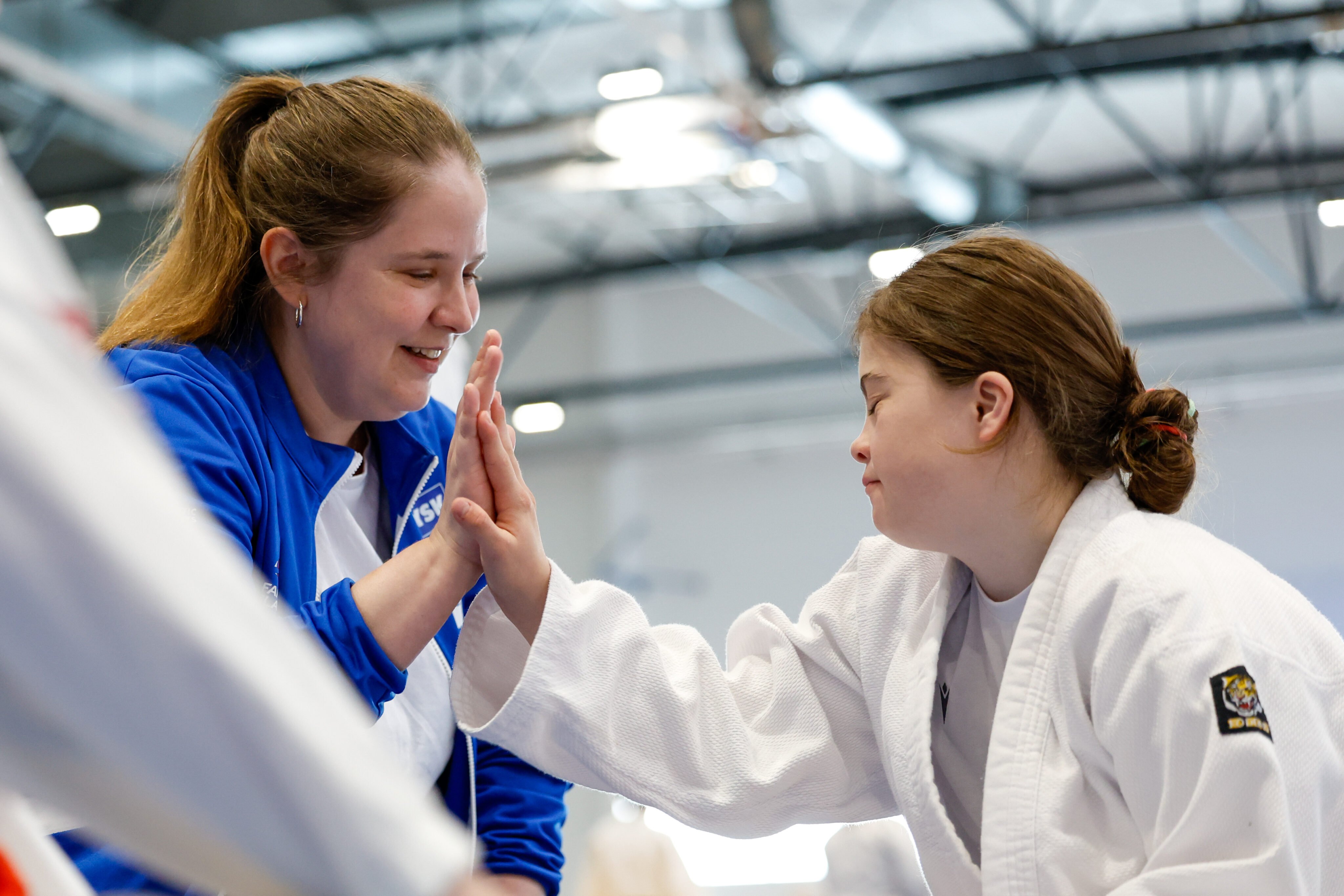
The Faroe Islands Judo Federation may be small, just six clubs spread across the islands, each a melting pot of ages, skills, and backgrounds but the ambitions are big. The Faroe Islands are independent members of the Paralympics. Beyond the Get Together Tournament, the dream is to one day bring athletes to the Paralympics and Special Olympics, where judo is also part of the programme. For now, though, the focus is on making the most of this weekend’s historic debut.
“This is visibility. This is saying: if you have an impairment, you are welcome. We will make space for you, and now you even have a pathway to compete internationally if you want to. That’s powerful for our community and now the world gets to see them.”
And her advice to other small federations considering the same path?
“Don’t get stuck in how you have always done things. Adapted judo is also about being adaptive in how you make opportunities a reality. We collaborate with our Parasport Federation and with other clubs outside of the islands. Sometimes you have to find creative solutions but it’s possible.”
Speaking of Parasport Faroe Islands, they have just hired a project coordinator to promote disability inclusion across all sports in the country which conclusively indicates that for the Faroe Islands, inclusion is not simply a project or a programme; it is a philosophy. It is parents stepping in, coaches re-learning, athletes showing up and refusing to be defined by limitations, and the collective commitment of countless volunteer hours. Adding to that is this weekend, on the mats in Poland, history is being made.
If you wish to follow the path of many countries and take the leap of faith that many have already taken, including the Faroe Islands, join the adapted judo family by contacting the commission at [email protected].
Author: Szandra Szogedi