





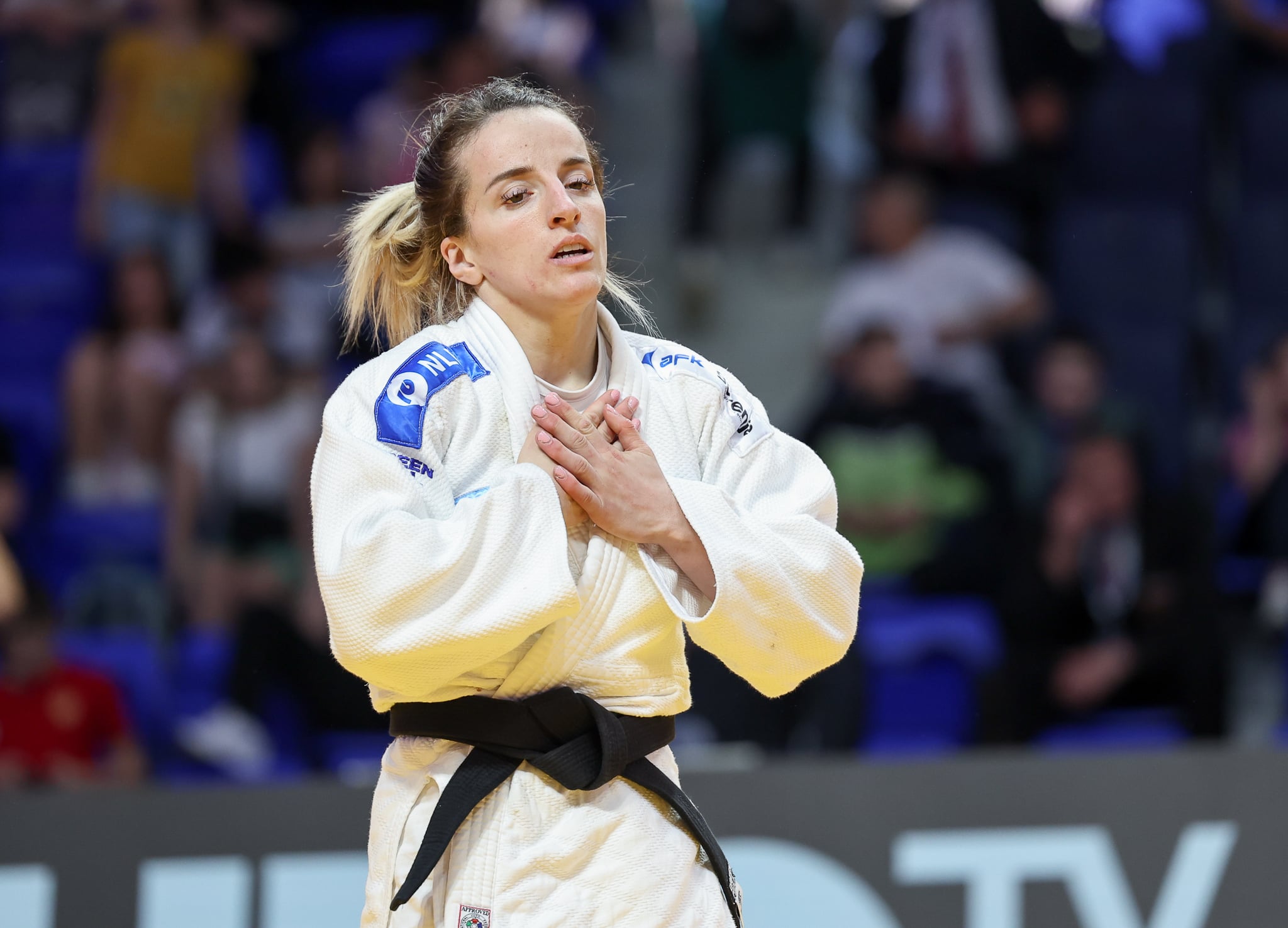
Kosovo’s top athlete, Distria Krasniqi, ends the year once again at the summit of international judo as the world number one. With the quiet determination of an athlete who continues to set new standards for herself, the European champion and senior world finalist in 2025, Krasniqi, nicknamed Disi, reflects on a season shaped by steadiness, patience and an enduring love for competition.

Summary of 2025
Asked to summarise her year, Krasniqi is clear and measured. “This year has been a great year for me. In every competition that I have been in, I have been on the podium. I took medals everywhere, so it has been great.” Beyond the numbers, certain moments carried particular weight. “Being European champion again for the third time and also for the first time at senior level to be in a World Championships final means a lot to me.”
She is equally open about the challenges. “In many competitions I did not have my best performance,” she admits. “But in the most important competitions I was on top of my form.” That ability to deliver when it matters most has defined her season and her career.
Always starting from the beginning
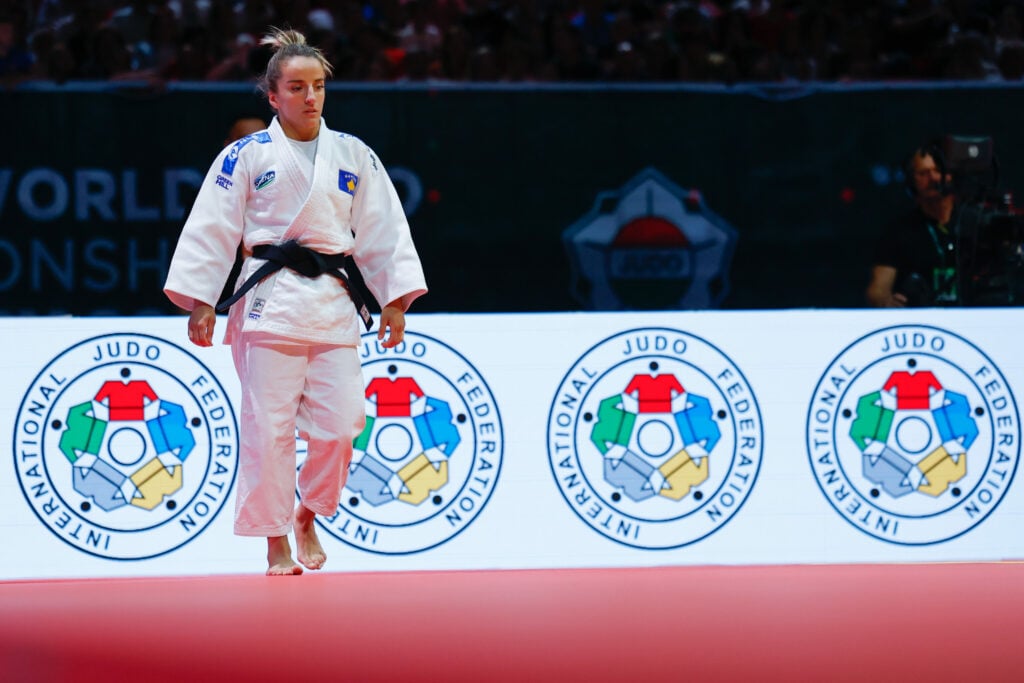
Consistency has followed Krasniqi since her early success as a junior world champion in 2015. For her, it comes from a conscious decision to reset after every result. “I think I am very consistent in hard work,” she says. “It does not matter if I win gold at the Olympic Games or European Championships. I try to forget about it and start again from the beginning and give one hundred percent in every competition.”
That mindset also explains her approach to the international calendar. “For me, the most important competitions are the European Championships, World Championships and of course the Olympic Games,” she explains. “The Grand Prix and Grand Slam competitions are a test to see where my work is going.” Each event feeds into a bigger picture. “Together with my coach Driton Kuka, we analyse my fights and he always finds some details to see what we can improve, so we can be better in the big competitions.”
Adapting across weight categories
Few athletes have shown the adaptability Krasniqi has demonstrated across two weight categories. Competing at -48kg and -52kg demanded both physical and technical evolution. “Going down from -48kg was challenging,” she recalls. “The judo is faster and very different. In my first competitions I did not perform well and it was hard to convince myself to continue.”
Through persistence and trust in her preparation, she adapted. “I worked hard, changed my grips, became faster and adjusted my judo.” Returning to the higher category after the Tokyo Olympic Games brought a new learning curve. “I realised I could not do the same judo against the -52kg athletes. I had to add new techniques and new grip positions so that I could be on top again.”
Competing with love, not pressure
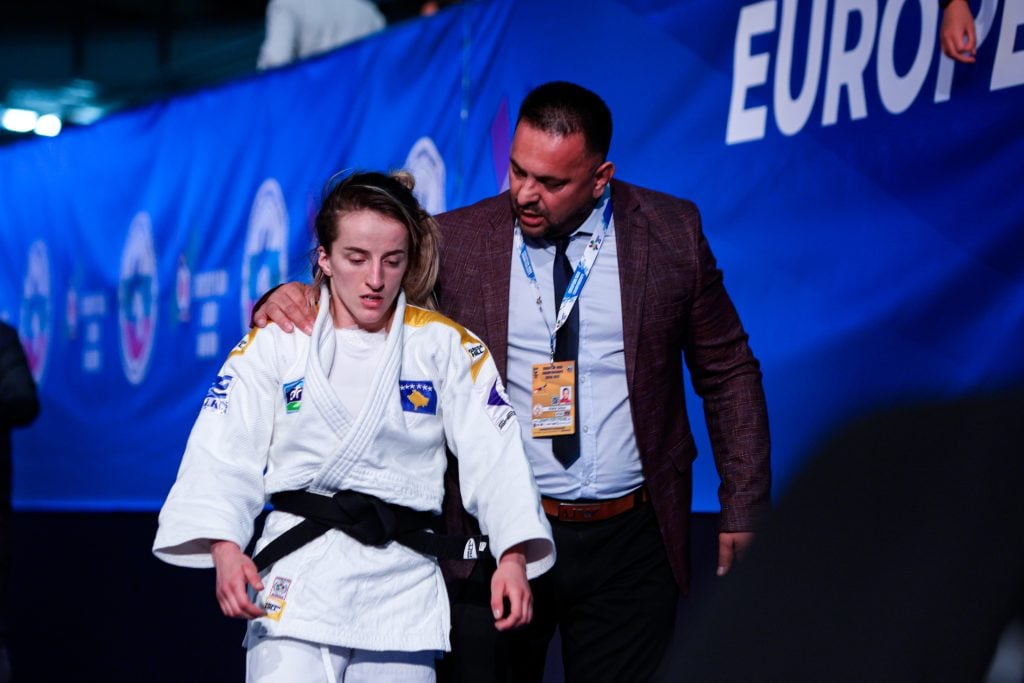
Pressure has never defined Krasniqi’s relationship with judo. “I did not take the international tour with pressure. I enjoyed it,” she says. “I love the competition feeling. If I could, I would compete every week.” That enjoyment is anchored in trust. “I trust my coach Kuka, his training programmes and his planning. I also trust myself and my ability to achieve big medals.”
When she looks back at her career, one moment stands out as a turning point. “Winning the Junior World Championships in Abu Dhabi in 2015 made me believe in myself,” she says. “From that moment, I started dreaming about Olympic gold.” Since then, the medals have followed, each carrying its own meaning. “Every medal has its own story and every medal is special for me.”
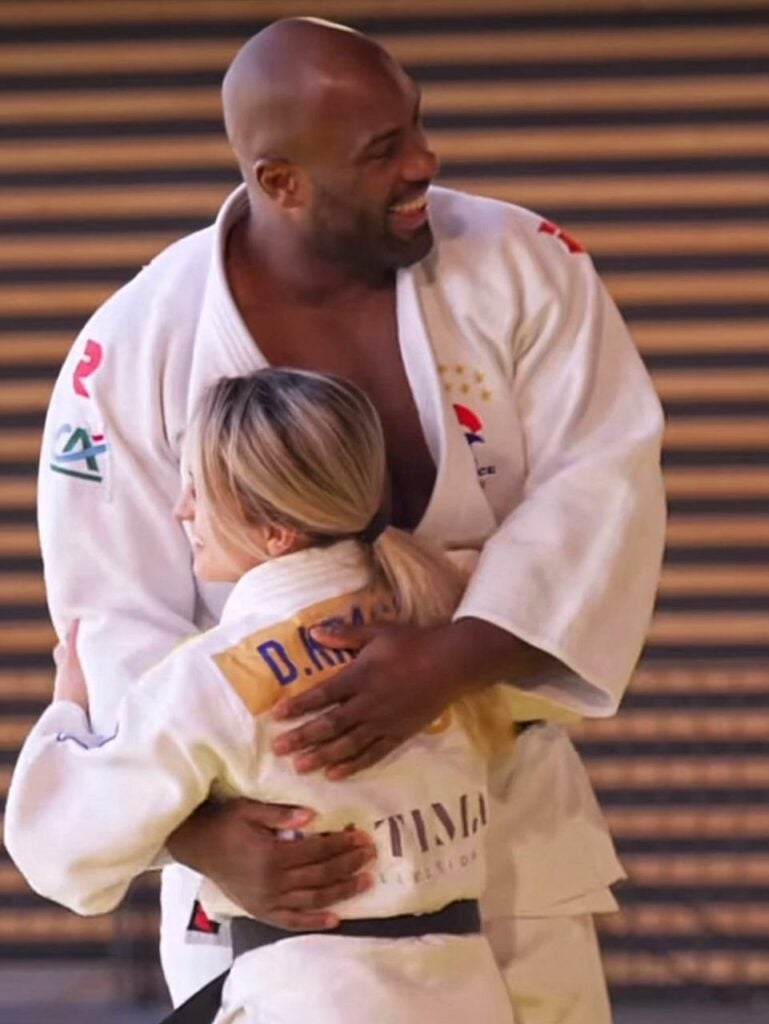

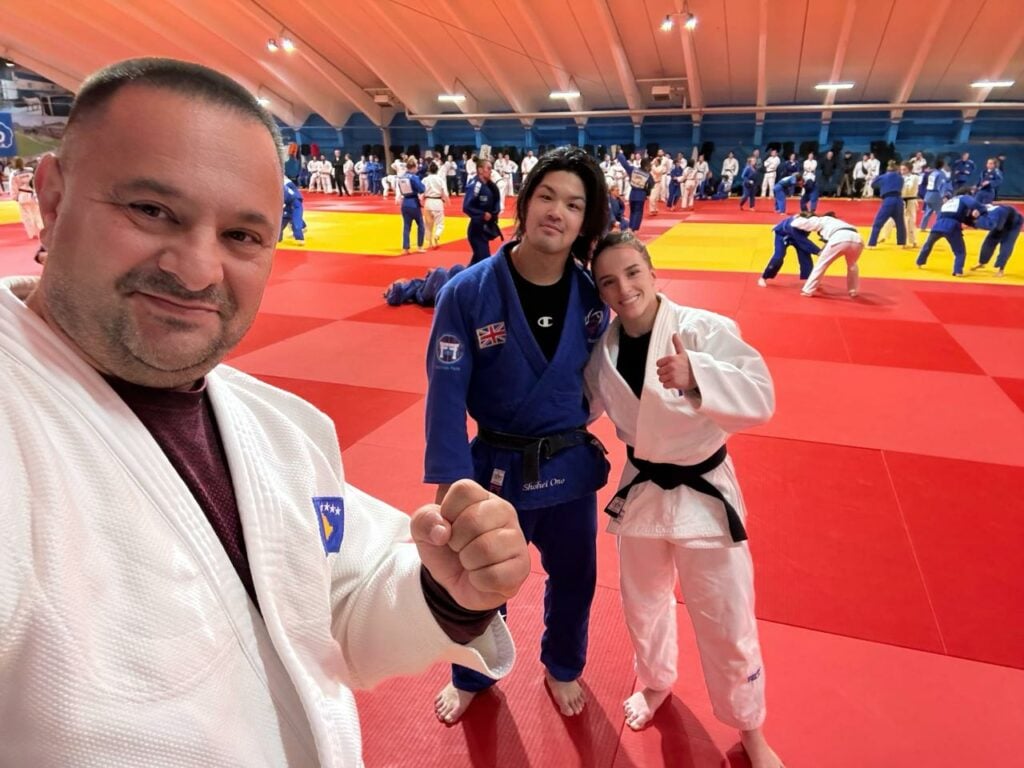
Some of her favourites: Teddy Riner, Shohei Ono and Disi’s cat.
European titles and Olympic confidence
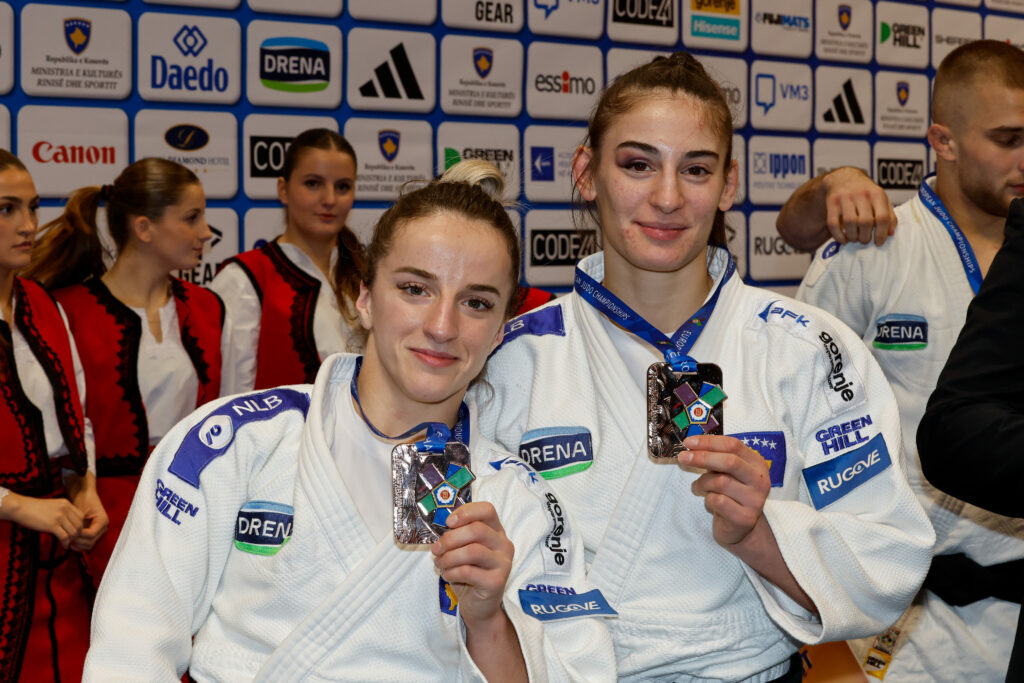
Her European Championship successes have often served as markers ahead of Olympic Games. “Lisbon was before Tokyo and Zagreb was before Paris,” she explains. “Both gave me confidence that I was in top shape for the Olympic Games.” Her most recent European title in Podgorica told a different story. “After winning two Olympic medals, it is harder to start again. Winning the European title one year after Paris showed me that I am not going to stop.”
Kosovo’s rise and a golden generation
Krasniqi’s career is inseparable from Kosovo’s emergence as a judo nation. Since 2009, the country has become a global reference, particularly in women’s judo. She points to firm belief as the foundation. “My coach never stopped, even after the war and all the challenges we had as a country,” she says. “He wanted to show the world that even a small and new country can achieve great things.”
She speaks with pride about being part of Kosovo’s golden generation. “Majlinda was the first who opened the doors,” she says. “After that, many of us followed, with the same coach, the same club and the same training programme.” The impact is already visible. “We inspired many children to start judo. Now they have opportunities that we did not have.”
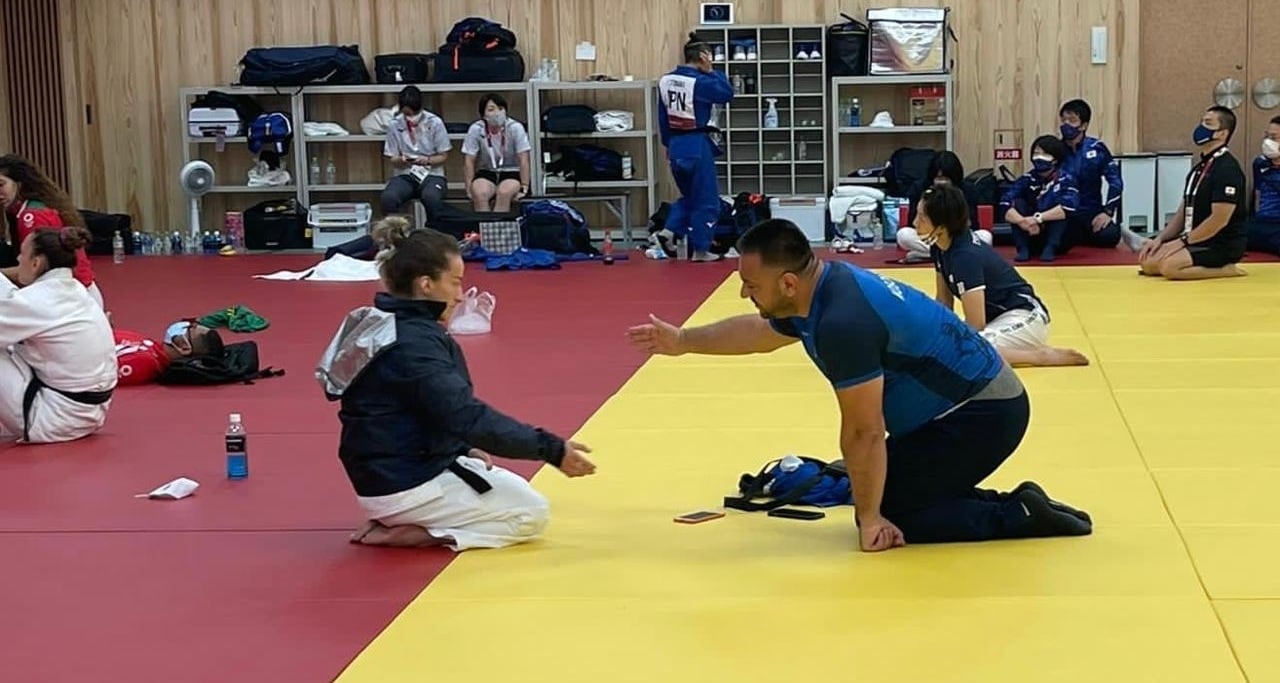
Disi’s favourite photo: that last moment and last words from her coach before the 2021 Tokyo Olympic Games final.
Looking ahead with clarity
Maintaining this level of success will be demanding but Krasniqi believes the foundations are strong. “Kosovo has a very good new generation,” she says. “My advice to them is to be strong and work very hard. Hard work always comes back.”
Despite high expectations, she remains grounded. “I try not to think about what others expect from me. What matters is that I am happy with my performance and my coach is happy.”
As she looks towards the next season, her focus remains on details. “At this level, small details decide everything,” she says. Paris will once again open her year, with the European and World Championships firmly in her sights.
Beyond competition, she keeps her options open. “I love judo,” she says. “After my career, I will probably still be involved in judo in some way but for now, I am not planning to stop.”
Author: Hans Van Essen