





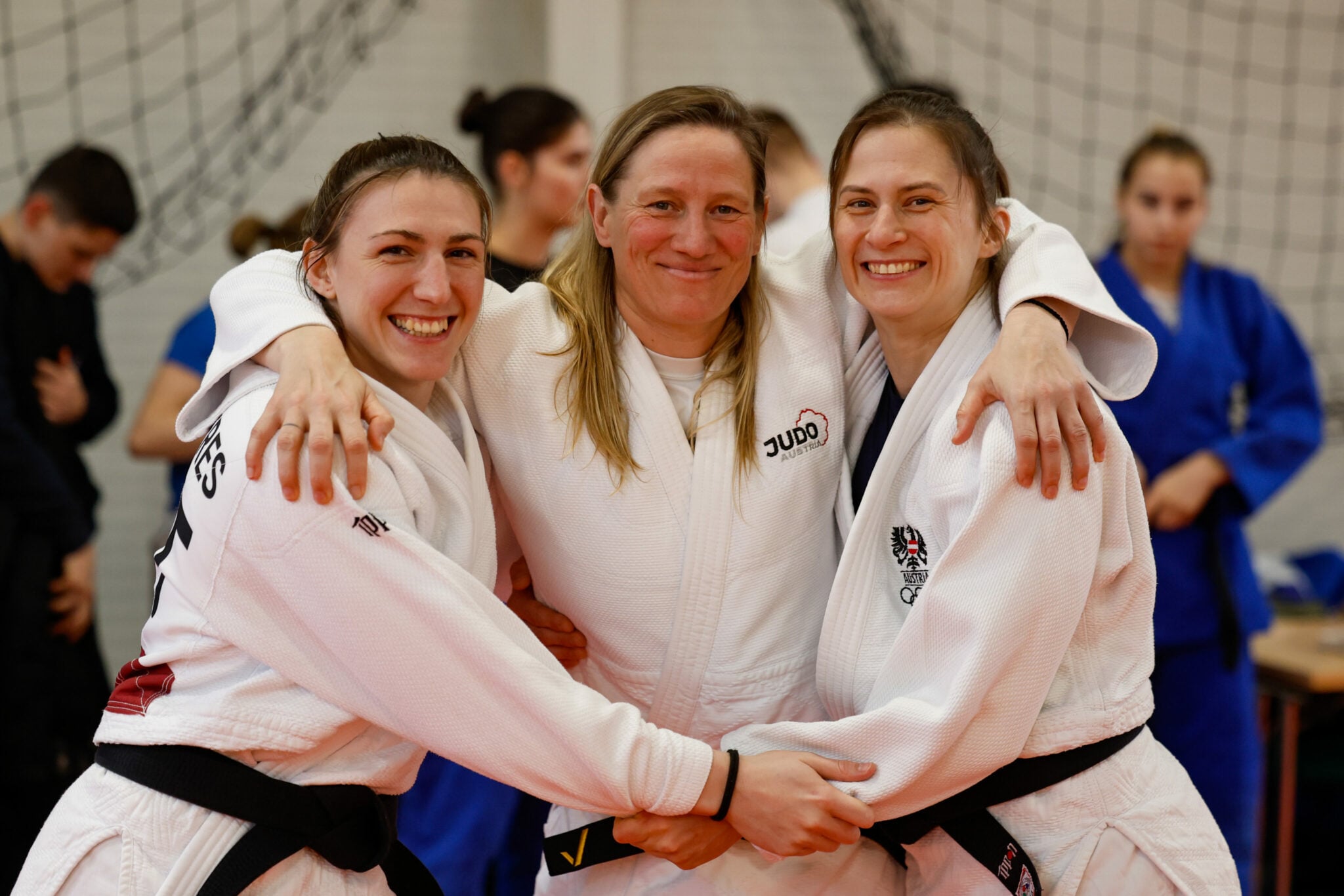
If there’s anyone who knows what it takes to become a champion, it’s Yvonne Bönisch.

The European Judo Union caught up with the Austrian head coach and Athens 2004 Olympic champion, Bönisch, ahead of the upcoming European Championships in Tbilisi, Georgia, from 16-19 April, at the EJU OTC training camp in Tata, Hungary.
Read on for our exclusive Q&A.
EJU: You have now had time to shape the Austrian team in your own image. What key identity or philosophy do you want people to recognise when they watch your athletes compete in Tbilisi?
Yvonne Bönisch: Oh, that’s a very hard question. I’ve now been working in Austria for five years, and we’ve changed a lot in the system.
For me, it’s very important to treat every athlete as an individual. Just because my main technique was kosoto-gake doesn’t mean everyone can or should do the same; it’s a good example of that. What matters most is that we prepare each athlete in a very individual way. I hope that we can be successful, but also that people recognise us clearly as Team Austria.
EJU: The Linz Grand Prix 2026, leading up to the Europeans, was not as successful as you had hoped. How did you regroup yourself, the coaching team, and the wider judo team to maintain a positive focus ahead of Tbilisi?
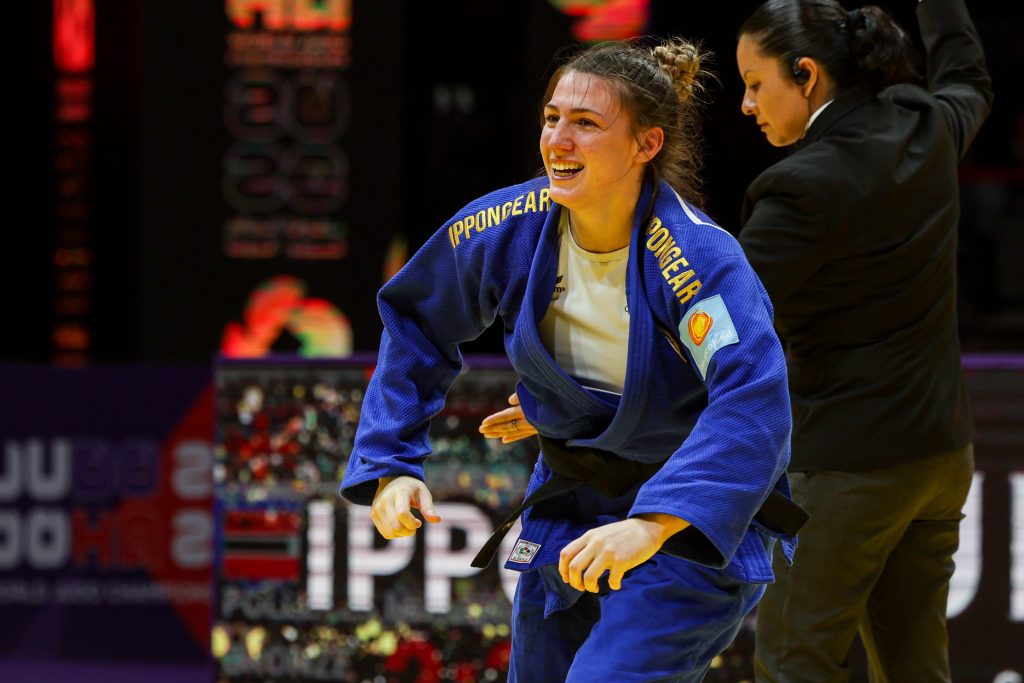
Yvonne Bönisch: The Linz competition was very disappointing, not just for me as a coach, but for the whole coaching team and the federation. When you host such a big event at home, you want the entire team to perform well and be successful. We had a gold medal from Michi [Polleres], which was great, only the second gold we’ve achieved at this event in the last four years, the other one came from Shamil [Borchashvili]. So our two big names delivered, but overall, the performances were not great.
We had some younger athletes, and there are explanations for that, but also some top athletes who had already medalled at Grand Prix and Grand Slam events were not able to show their level. After the event, we analysed everything and identified a few reasons. That’s the most important thing, to learn and improve for the Europeans. We also had quite a lot of injuries beforehand. It can sound like excuses, but I know how hard we work, and how hard the athletes work. I’m confident we will perform better at the Europeans.
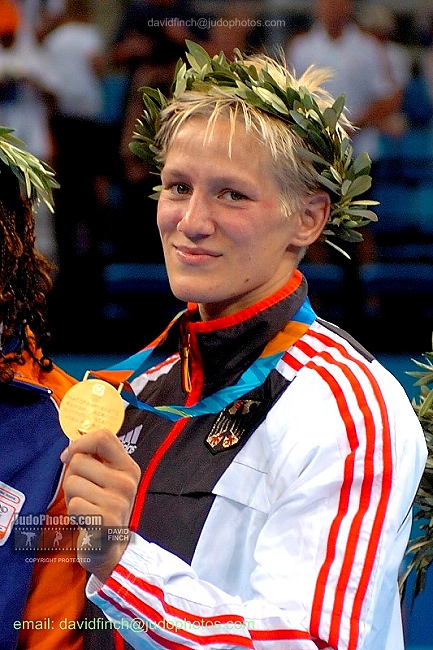
EJU: As an Olympic champion yourself, how do you translate your personal competitive experience into coaching decisions, particularly in high-pressure championship environments?
Yvonne Bönisch: First of all, I don’t like to talk too much about being an Olympic champion. It was almost 20 years ago, and I’m not on the mat anymore as an athlete. I’ve grown a lot as a coach, from club level to national coach, and now head coach of Austria.
For me, the most important thing is to earn the respect of the athletes and help them understand what it means to work hard every day, to live for their dream. That also means continuing when things are not going well, when you are injured or losing, to keep believing in yourself and keep working. In the end, everything comes down to one day, like at the Olympics.
EJU: Preparation for a major event like the European Championships is never just physical. How have you approached the mental readiness of your athletes in the final weeks?
Yvonne Bönisch: I think most of our top athletes work with a mental coach or psychologist, and that’s very important. But also, the relationship with the coach is key. We spend more than half the year together, so it’s about trust. We are like a family, not friends, but a family working together. Mental health and being mentally ready are crucial in high-level sport.
EJU: Looking at your current squad, are there specific athletes or weight categories where you feel Austria could surprise or exceed expectations in Tbilisi?
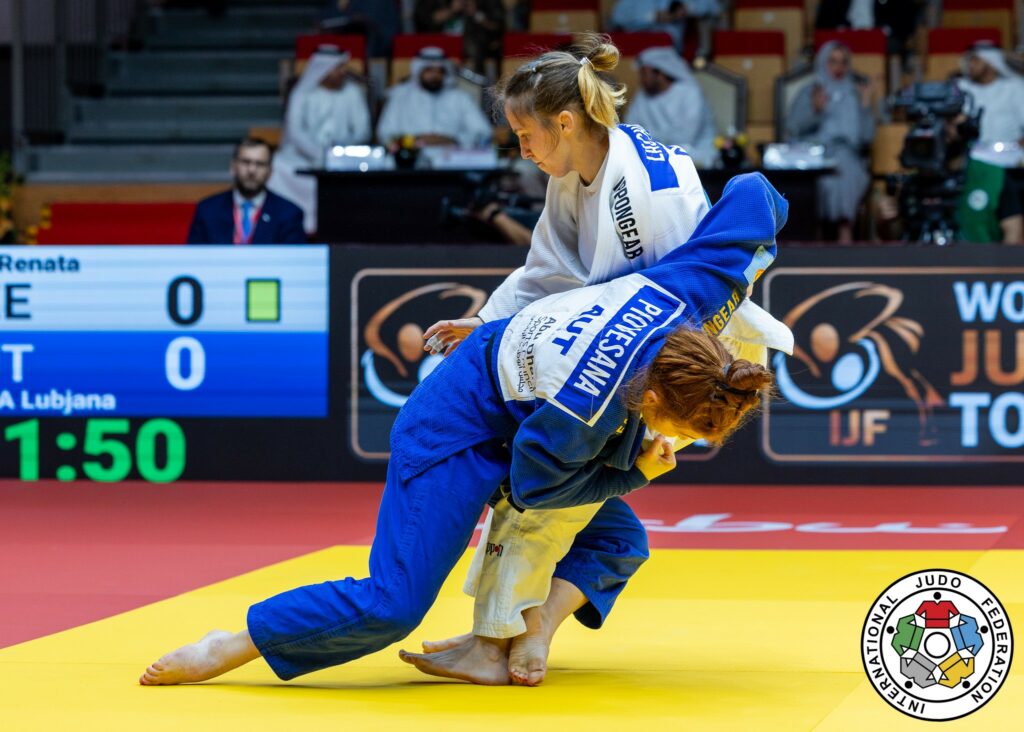
Yvonne Bönisch: It’s hard to say. We have two top athletes in the women’s categories, Lulu [Lubjana Piovesana] and Michi, so of course we hope for big results there. But we also have some men who have already medalled at Grand Prix and Grand Slam events. I hope they can show their level on the mat in Tbilisi.
EJU: As the 2026 European Championships do not yet form part of the qualification pathway for LA 2028, does this influence your approach or objectives for the event?
Yvonne Bönisch: A little bit, yes. The Olympic qualification starts at the end of June, and that is the main goal, to be 100 per cent ready for that. But the European Championships are still a major highlight for us. We bring our top athletes, but also some from a team perspective. We hope they can achieve good results and maybe put themselves in a position to step up to bigger events and into Olympic qualification.
EJU: Women’s judo in Austria has traditionally been a stronghold. What key factors have contributed to this sustained success, and how do you ensure continued development across both male and female athletes?
Yvonne Bönisch: I don’t think we push it in a special way. Austria has had strong female athletes for many years, starting in the 1980s with world champions, then later athletes like Sabrina Filzmoser and Claudia Heill, and continuing with Bernadette Graf, Kathrin Unterwurzacher, and now Michi, Lulu and Magdalena [Krssakova]. But at the same time, Austria has also had strong men in the past, so I don’t think there is one specific reason or difference. It’s more about the overall system and development.
EJU: Beyond medals, what would define a successful European Championships for you and your team this year?
Yvonne Bönisch: If we come home with one medal and maybe another top-seven result, we would be very happy. But the most important thing is that the athletes perform better than they did at the Grand Prix in Linz. If they show their level, then I will go home satisfied.
Author: Grace Goulding